
Currently Empty: $0.00

Alright, let's be real. Quitting smoking isn't just about tossing your pack in the bin and hoping for the best. If it were that easy, you'd have done it already. The real battle starts long before your quit day—it’s won or lost in your head.
Building Your Foundation to Quit Smoking
That moment you decide you want to quit is huge. But turning that desire into a smoke-free life? That takes building a solid mental and emotional framework first. This isn't about raw willpower; it's about smart preparation, finding your real motivation, and starting to see yourself differently.
Before you even think about that last cigarette, taking the time to get your head in the game can make all the difference. This is where you set the stage for everything that follows. It's about figuring out why you're doing this, knowing what's coming, and lining up the support you'll need to get through the tough spots.
Define Your Personal Why
Your motivation is the fuel that will get you through the worst cravings. Vague reasons like "it's unhealthy" just don't cut it when you're desperate for a smoke. You have to dig deeper and find the specific, personal reasons that hit you where you live.
Seriously, what will you gain? Is it:
- Your Health: Finally being able to climb a flight of stairs without getting winded? Having the energy to actually play with your kids? Or just wanting to dramatically lower your risk for some really scary diseases?
- Your Family: Setting a better example for your kids? Making sure you're around to see them grow up, get married, and have their own families?
- Your Wallet: How does an extra few thousand dollars a year sound? Think about what you could do with that cash—a vacation, a down payment, or just getting out of debt.
- Your Freedom: Being done with planning your entire day around smoke breaks. No more standing outside in the Calgary cold. No more being controlled by that next nicotine hit.
Grab a piece of paper or open the notes app on your phone and write these down. Right now. When you feel your resolve slipping, this list will be the most powerful tool you have.
A strong 'why' gives you the power to get through the 'how.' When your reason for quitting is crystal clear, you'll find the strength to handle whatever comes next.
Choose a Meaningful Quit Date
Okay, time to make this real. Setting a quit date turns a vague "I should quit someday" into a concrete plan. Don't just pull a random day out of a hat; make it mean something. This simple act transforms a wish into a solid commitment.
Pick a date sometime in the next two to four weeks. This gives you enough time to get ready without letting the motivation fizzle out. A significant date—like a birthday, an anniversary, or even just the first day of a new season—can add some extra weight to your commitment.
Once you’ve picked it, mark it on your calendar. Circle it in red. Set a reminder. Treat it like the most important appointment you have this year.
Prepare for the Journey Ahead
Knowing what's coming is half the battle. Let's be honest: nicotine withdrawal is real, and it’s not fun. But it's also temporary. The worst of it usually peaks in the first three to five days and then starts to fade over the next couple of weeks. Understanding this helps you see the discomfort for what it is: a sign that your body is already starting to heal.
Start making the mental shift now. Instead of thinking of yourself as a "smoker trying to quit," start seeing yourself as a "non-smoker." It sounds simple, but this change in identity is incredibly powerful. You're not depriving yourself of anything; you're reclaiming your health, your money, and your freedom.
Choosing Your Quit Method
Alright, you’ve done the mental prep work. Now it’s time to pick your strategy.
There’s no one-size-fits-all magic bullet for quitting. The best approach is always the one that actually clicks with your personality, your lifestyle, and just how dependent on nicotine you are. Trying to force a method that doesn't feel right is a recipe for frustration.
Let’s break down the three main paths people take: going cold turkey, tapering down gradually, or using Nicotine Replacement Therapy (NRT). Each one has its own vibe, and what works for your buddy might be the totally wrong fit for you.
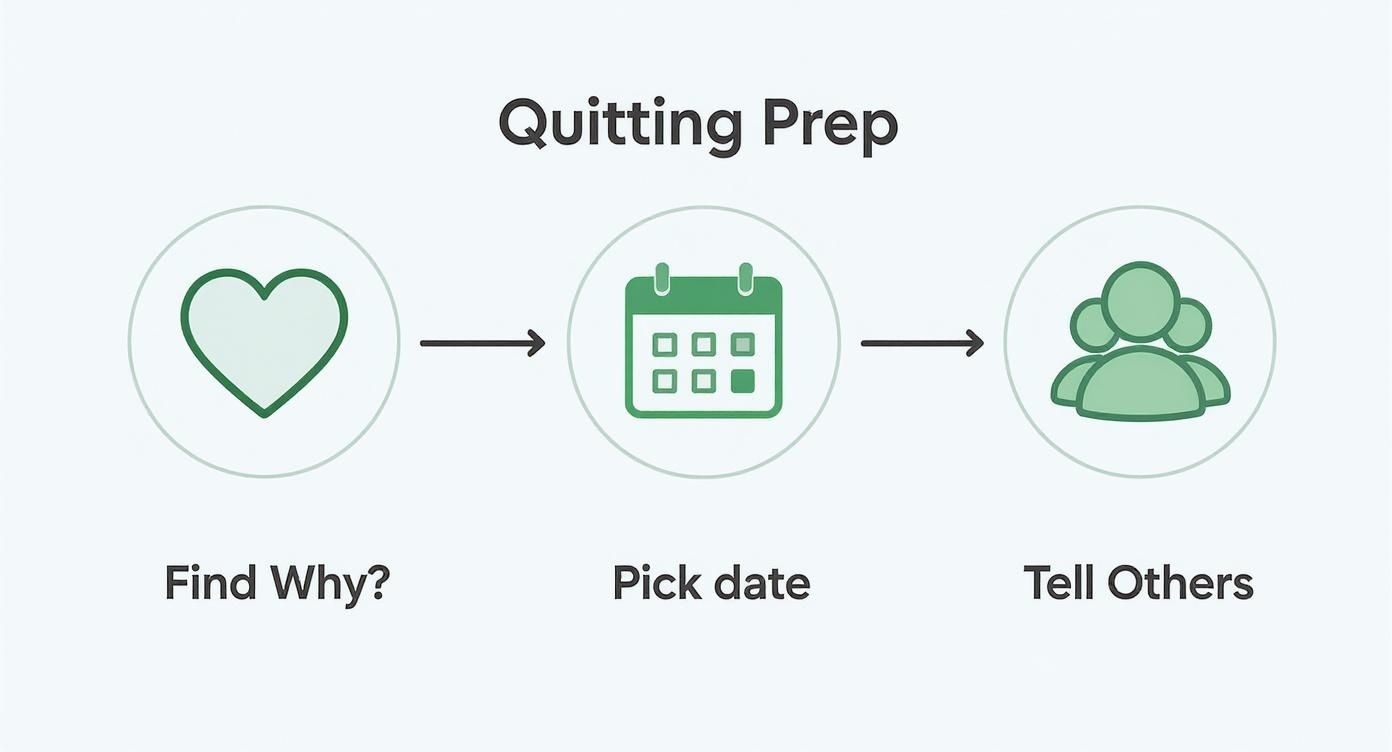
This flowchart nails the fundamentals. Before you even think about how you'll quit, you need a powerful reason, a set date, and people in your corner. Get that foundation solid first.
Going Cold Turkey
This is the "rip the band-aid off" approach. You pick your quit day, and that's it—no more cigarettes. Zero. It’s a clean, decisive break from nicotine.
For some people, this is the only way that makes sense. If you're an all-or-nothing type of person and have found that cutting back just prolongs the pain, a hard stop might be your best bet.
Be ready, though. Going cold turkey means you’ll face the full intensity of withdrawal right from the start. The first 72 hours are often the toughest. Success here is all about having a rock-solid 'why' and a game plan full of distractions to power through those initial cravings.
Tapering Down Your Use
If a sudden stop sounds too jarring, tapering offers a more gradual off-ramp. The idea is to slowly reduce the number of cigarettes you smoke over a few weeks, letting your body adjust to lower nicotine levels along the way.
This can make the final quit day less of a shock to your system.
A simple tapering plan might look something like this:
- Week 1: Cut out 2 cigarettes from your daily routine.
- Week 2: Drop another 2 per day.
- Week 3: Focus on stretching the time between cigarettes.
- Week 4: Get down to just 1-2 per day before stopping completely.
This method demands discipline. You have to track your progress and resist the urge for "just one more." It’s a great fit for people who thrive on structure and planning.
Using Nicotine Replacement Therapy (NRT) And Other Aids
Think of NRT as a tool to separate the chemical addiction from the behavioural habit. It gives you nicotine to manage withdrawal symptoms, but without the thousands of other toxic chemicals in cigarette smoke. This frees you up to focus on breaking the rituals—the morning coffee cigarette, the after-dinner smoke—first.
Common NRT options include:
- Patches: Provide a steady, slow release of nicotine all day.
- Gum & Lozenges: Great for tackling sudden, sharp cravings as they hit.
- Inhalers & Sprays: Mimic the hand-to-mouth action, which can be a huge help for the psychological side of the habit.
These aren’t a magic cure, but studies show they can literally double your chances of quitting successfully. They just take the edge off enough for you to build new, healthier habits.
For those in Calgary looking for modern, tobacco-free options, nicotine pouches have become a popular tool. They can be a convenient part of an NRT strategy. Having a reliable online shop that offers same-day delivery in Calgary can be a game-changer—it means one less excuse and one more tool in your quit kit, right when you need it.
Comparing Popular Quit Smoking Methods
Choosing your path is a personal decision. This table breaks down the key differences between the main strategies to help you see which one might align best with your own style and needs.
| Method | How It Works | Best Suited For | Potential Challenges |
|---|---|---|---|
| Cold Turkey | Abruptly stopping all nicotine use on a set quit date. No gradual reduction. | People with a decisive, "all-or-nothing" personality who find tapering difficult or ineffective. | Intense initial withdrawal symptoms (cravings, irritability) that can be difficult to manage without strong resolve. |
| Tapering | Gradually reducing the number of cigarettes smoked over a set period before the final quit date. | Individuals who prefer a structured, methodical approach and want to ease their body off nicotine slowly. | Requires strong discipline and self-monitoring. The temptation to have "just one more" can derail progress. |
| NRT & Medical Aids | Using products like patches, gum, lozenges, or pouches to supply nicotine and ease withdrawal symptoms. | Anyone who wants to soften the blow of withdrawal and focus on breaking behavioural habits first. | Can be costly. It's a tool, not a cure—you still need to commit to changing your habits. |
Ultimately, there is no "wrong" choice here. The best method is the one you can stick with. Review the options, be honest with yourself about what feels most manageable, and commit to that path. You can always adjust your strategy if needed.
Your Survival Guide for Nicotine Withdrawal
Alright, let's be real: the first few weeks after you quit are going to be tough. This is where your body and mind have to learn how to function without nicotine, and while it's a massive win for your health, it can feel like you're in a battle. Think of this as your practical playbook for getting through it.
So, what's actually going on inside your body? When you stop smoking, your system starts to miss the nicotine it's grown dependent on. This leads to withdrawal symptoms—everything from physical stuff like headaches and feeling wiped out, to mental hurdles like being irritable, anxious, and hit with intense cravings. But here's the good news: this is temporary. It’s a sign your body is healing. The worst of it usually peaks within the first 72 hours and then slowly gets better over the next couple of weeks.

Identifying and Outsmarting Your Triggers
Cravings can feel like they sneak up on you, but they're almost always tied to specific triggers. These are the routines, emotions, people, or places your brain has wired to smoking. Figuring out your personal triggers is the first step to taking their power away.
Take a second to think about your daily habits. Do you always reach for a cigarette:
- With your morning coffee?
- On your commute to work?
- Right after a meal?
- When you're stressed or just bored?
- During a smoke break with coworkers?
Once you know what they are, you can make a plan. For example, if that morning coffee is a huge trigger, maybe switch to tea for a couple of weeks or just drink your coffee in a different spot. If stress is your cue, have a list of non-smoking stress-busters ready to go—a quick walk, blasting a favourite song, or a five-minute breathing exercise. This isn't about avoiding your life; it's about rewriting the script for these moments.
Don’t just wait for cravings to hit. By identifying your triggers in advance, you can create a proactive defence, making you the one in control, not the urge to smoke.
Your Toolkit for Immediate Craving Relief
When a powerful craving hits, you need an immediate plan to get through the next five to ten minutes until it fades. Let's be honest, willpower alone often isn't enough. Instead, you need proven techniques that break the craving cycle. One of the most effective strategies is the 'four Ds'.
- Delay: Just tell yourself you'll wait 10 more minutes. That small window is often all it takes for the intense urge to lose its grip.
- Deep Breathe: Take slow, deep breaths. Inhale for four counts, hold for four, and exhale for six. This simple trick calms your nervous system and helps you regroup.
- Drink Water: Sip on a glass of cold water. It gives your hands and mouth something to do and helps flush out toxins.
- Do Something Else: Change your scenery or your activity immediately. Get up and walk into another room, call a friend, do a few stretches, or start a small task. Distraction is a seriously powerful tool.
Using Modern Aids to Soften the Landing
For a lot of people, the physical side of withdrawal is the biggest mountain to climb. This is where tools like Nicotine Replacement Therapy (NRT) can be a game-changer. Options like patches, gum, and lozenges give you a controlled dose of nicotine to take the edge off the physical symptoms, freeing you up to focus on breaking the behavioural habits.
Tobacco-free nicotine pouches are another solid option that fits this strategy perfectly. They deliver nicotine without any of the harmful stuff that comes from burning tobacco, making them a great harm-reduction tool. For those in Calgary, getting them is easy—local online shops offer delivery to have them at your door in no time. That convenience means you have support right when you need it most. While they're effective, it’s always a good idea to understand any potential side effects they might have as you work them into your quit plan.
Having a solid mix of both behavioural tricks and physical aids gives you the best shot at getting through withdrawal. Just remember, this phase doesn't last forever, and every single craving you beat makes you that much stronger.
Exploring Tobacco-Free Nicotine Pouches as a Modern Aid
When you're mapping out how to quit smoking, the usual suspects like patches and gum come to mind. But for a lot of adult smokers, those traditional routes just don't click. A more modern tool might be a better fit, and that’s where tobacco-free nicotine pouches are making a real difference as a practical harm-reduction tool.
Unlike cigarettes, these small, discreet pouches contain zero tobacco leaf. Nothing is burned. That means you get the nicotine you’re craving without any smoke, vapour, or tar.
That distinction is everything. By separating nicotine from the thousands of toxic chemicals released when you light a cigarette, pouches let you manage cravings without inhaling carcinogens. For adult smokers, this is a massive step away from the most dangerous way of using nicotine.
Understanding How Nicotine Pouches Work
Using a nicotine pouch couldn't be simpler. You just park one between your lip and gum, and the nicotine absorbs right through the lining of your mouth. It’s a steady, controlled release that helps keep those nasty withdrawal symptoms from taking over.
Because they’re completely smoke-free and odourless, you can use them just about anywhere—situations where lighting up or even vaping is out of the question. That flexibility is a huge win. It helps you stick with your quit plan without having to constantly duck outside or find a designated area just to manage a craving.
Think of nicotine pouches as a temporary bridge, not a final destination. They help you break the dangerous habit of smoking by satisfying cravings in a much less harmful way. The end goal is always to eventually taper off nicotine entirely.
Integrating Pouches Into Your Quit Plan
If you’re thinking about giving pouches a try, you need to go in with a solid strategy. These are a tool, not a magic fix. How well they work depends entirely on how you fit them into your bigger quit plan.
- Choose the Right Strength: Pouches come in a range of strengths, usually from 3 mg up to 10 mg or more. If you were a pack-a-day smoker, you’ll probably need a higher strength at first to handle those intense cravings. The trick is to find a level that takes the edge off without being too much, then gradually step down over time.
- Use Them for Cravings, Not Habits: This is key. You need to break the ritual of smoking—that hand-to-mouth motion. Instead of popping a pouch in at the same time you would’ve had a cigarette, use them only when a real craving hits hard. This helps you disconnect from the habitual side of your addiction.
- Set a Timeline: Decide how long you plan to use the pouches. Treat them as a short-term aid to get you through the first few weeks or months, which are always the toughest. Having a clear end date for tapering off ensures you don’t just swap one habit for another. For a deeper look at their role, you can learn more about how nicotine pouches compare to traditional tobacco products.
Sourcing Nicotine Pouches in Calgary
For adult smokers right here in Calgary, getting these modern aids is incredibly easy. When a craving hits, the last thing you want is another hurdle. That’s why a local online shop that offers reliable delivery in Calgary is an absolute game-changer.
Imagine ordering from an online shop and having your pouches show up at your door, often with same-day delivery. It completely eliminates the excuse of running to the corner store for a pack "just this once." With fast fulfillment, the support you need from a local online shop is right there, right when you need it. That kind of instant access makes it so much easier to stay on track and commit to a smoke-free life.
Building a Support System to Prevent Relapse

Getting through those first few weeks is a huge win, but let's be real—staying smoke-free for good is a whole different ball game. The real test comes later, and long-term success often boils down to two things: the people in your corner and a solid plan for when things get tough.
Trying to quit smoking on your own is like trying to climb a mountain without a rope. It's an isolating and overwhelming mission, especially when life throws a curveball. That's why building a dedicated support network isn't just a nice idea; it's one of the most powerful moves you can make.
Assembling Your Personal Support Team
Your support system can be anyone you trust—friends, family, a partner, or even a professional counsellor. The trick is being crystal clear about what you need from them. Most people genuinely want to help; they just don't always know how.
Instead of vague requests, give them specific jobs. Think about creating a "quit crew" with a few key players:
- The Cheerleader: This is the friend you text when you crush a milestone, like hitting your first smoke-free week. They’re there to celebrate every single win, no matter how small it might feel.
- The Distractor: Got a monster craving? This is the person you call for an instant change of pace. A quick chat about anything but smoking can be just enough to derail that craving's power.
- The Accountability Partner: This is someone you trust to check in on you and give you a gentle nudge if you're struggling. They get your goals and are genuinely invested in helping you succeed.
Don't be afraid to tell people exactly what you need. A simple script like, "Hey, I'm quitting smoking on Friday. It would be a massive help if you could just be patient with me if I'm a bit grumpy next week," works wonders and sets clear expectations.
Leveraging Professional and Community Resources
Beyond your personal circle, professional resources offer structured support that has been proven to dramatically boost your chances of quitting for good. These services are staffed by experts who know exactly what you're going through.
Think of professional support as adding a seasoned coach to your team. Quitlines and counsellors offer evidence-based strategies and a non-judgmental ear, providing a level of guidance that friends and family can't always match.
National and local quitlines offer free, confidential coaching over the phone, and they are incredibly effective. Strong public investment in programs like California's state quitline shows just how successful they can be. But access isn't always equal. A 2023 report revealed that while Latinos in California try to quit at high rates, they use these free state programs less often than non-Hispanic White populations, highlighting major gaps in care. You can read more about these findings on tobacco control efforts.
Creating a Resilient Relapse Prevention Plan
First, let's get one thing straight: a slip-up is not a failure. It's just a data point. The difference between a single slip and a full-blown relapse is having a plan to get right back on your feet.
Your relapse prevention plan should be a living, breathing document you can grab in a moment of weakness. It should include:
- A List of Your Triggers: Revisit the triggers you identified earlier. Write them down, and next to each one, list a specific action you'll take instead of reaching for a cigarette.
- A Reminder of Your 'Why': Keep that list of your core motivations somewhere you can see it. Reading it over can be the boost you need when your resolve is fading.
- Emergency Contacts: Have the numbers of your key support people ready to go. A quick call can make all the difference.
Finally, remember to celebrate your progress. Every day, week, and month you stay smoke-free is a massive victory. Acknowledge these milestones with a small, healthy reward. This kind of positive reinforcement helps rewire your brain to associate being smoke-free with good things, building a foundation for a healthier, more resilient you.
Answering Your Questions About Quitting
Look, even the most rock-solid plan to quit smoking is going to come with questions. It's totally normal. Getting straight answers is key to keeping your confidence up and staying on track. Let's tackle some of the most common questions that come up during the quitting process.
How Long Does Nicotine Withdrawal Actually Last?
Let's be real—the first week is the toughest. The physical side of nicotine withdrawal usually hits its peak somewhere between day three and day five. After you get over that initial hill, the really unpleasant stuff like headaches and feeling irritable starts to fade pretty quickly over the next two to four weeks.
What tends to stick around longer are the psychological cravings, the ones that are hardwired to your daily habits and triggers. This is exactly why building new routines is just as crucial as gutting out the first few weeks. Just remember: the worst of the physical battle is usually over in a month. That’s a powerful thought to hold onto.
Is It Okay to Use Nicotine Pouches Long-Term?
Think of tobacco-free nicotine pouches as a temporary tool, a bridge to get you away from cigarettes, not a final destination. Their whole purpose is to help adult smokers ditch the incredible harm of lighting up by offering a cleaner way to manage nicotine cravings.
The end game for most people should be tapering off nicotine entirely. If you find you've been using pouches for a while, it's a good idea to map out a strategy for stepping down, either by using lower-strength pouches or just using them less often. If you're curious about how they might feel during this process, it helps to know if nicotine pouches can cause stomach problems or other potential side effects.
What if I Slip Up and Have a Cigarette?
First off, breathe. A slip-up is not a failure; it’s a bump in the road and an incredibly common one at that. Don't let a single cigarette convince you to throw away all your progress. The biggest mistake you can make is falling into that "all or nothing" trap.
Acknowledge it happened, figure out what triggered you, and get right back to your quit plan. One cigarette doesn't define your journey. Remind yourself why you started this in the first place and jump back on the horse. Your next smoke-free moment starts right now.
How Much Money Will I Actually Save by Quitting?
This is one of the best parts. The financial payback for quitting is immediate and significant. Depending on where you live in Canada, a person smoking a pack a day can easily pocket an extra $4,000 to $6,000 per year.
Seriously, find an online savings calculator and punch in your numbers. Watching that dollar amount climb every single day is a seriously powerful motivator when you’re having a tough moment.
Ready to use a modern, tobacco-free option to help you quit for good? POUCH CLUB is Calgary's go-to online shop for high-quality nicotine pouches. We offer a huge selection and fast, same-day delivery in Calgary to help you on your quit journey. Check out your options today at https://pouchclub.vip.
Article created using Outrank